



At first glance, capacitors may seem like simple components. However, they play a critical role in the performance and stability of electrical circuits. From smoothing voltage to storing energy, their functions are both essential and versatile. With so many types available, each suited for specific roles, understanding how they work and where they apply is essential. In this blog, we will explore electrical capacitors, including the capacitor definition, function, common applications, and the importance of understanding the various capacitor types before selecting the right one for specific applications.
What Is a Capacitor?
A capacitor is a small yet mighty electronic component that stores and releases electrical energy. In general terms, we can think of them like tiny rechargeable batteries, quickly charging and discharging to meet a circuit's needs. Therefore, capacitors help regulate electrical flow by storing energy and then releasing it when needed by electronic systems. There are numerous types of capacitors, each serving specific purposes, such as smoothing voltage fluctuations, filtering signals, or delivering quick bursts of power to maintain circuit stability and ensure reliable operation.
Below is the capacitor symbol for polarized and non-polarized capacitors.

Capacitor Meaning and Function
An electrical capacitor is a passive component that stores energy in electrical circuits, rather than generating it. This stored energy can serve many purposes, from stabilizing voltage or filtering electrical noise to providing power when a circuit demands it. What is a capacitor used for? The capacitor function is essential to a wide range of applications, including power supplies, signal processing, motor control, and timing circuits. An electric capacitor’s ability to charge and discharge rapidly makes it essential for maintaining circuit performance, protecting components, and ensuring efficient operation across a wide range of electrical systems.
How Do Capacitors Work?
Simple in design, a capacitor consists of two conductive plates separated by an insulating material known as the dielectric. When voltage flows across the plates, an electric charge accumulates, with positive charges on one plate and negative charges on the other. The dielectric prevents current from flowing directly between the plates, allowing the capacitor to store energy in the resulting electric field.
This energy-storing ability is known as capacitance, measured in farads (F). Several factors influence a capacitor’s capacitance, including the surface area of the plates, the distance between them, and the type of dielectric material used. The basic formula for capacitance is C = Q / V, where “C” is capacitance in farads, “Q” is the electric charge in coulombs, and “V” is the voltage across the plates.
The greater a capacitor's ability to store a charge at a given voltage, the higher its capacitance. These physical properties ultimately determine how the capacitor behaves in a circuit, i.e., whether it's used for smoothing power supply ripple, blocking DC, or tuning radio frequencies.
Common Capacitor Uses
Electric capacitors can be found in nearly every electrical application, from AC units to cars to computers. Their ability to quickly store and release energy makes them highly versatile in both everyday and specialized applications.
One of the most common capacitor uses involves power supply filtering. In these applications, capacitors smooth out voltage fluctuations by storing excess energy and releasing it when there’s a drop. This capacitance application helps ensure a stable voltage output while protecting sensitive components in devices like computers, TVs, and industrial controllers.
Another common application is EMI filters, which help block unwanted electrical noise from power and signal lines. This noise, typically caused by other electronic devices, can interfere with the operation of other electronics. Therefore, capacitors in EMI filters capture this high-frequency noise and safely dissipate it. This capacitance application not only prevents interference with nearby equipment but also helps devices run more smoothly.
Types of Capacitors
There are many types of capacitors, each designed with specific materials and characteristics to suit a wide range of functions and applications. When selecting the right type for an application, it’s essential to consider factors such as size, voltage, frequency, and stability requirements.
Ceramic Capacitors
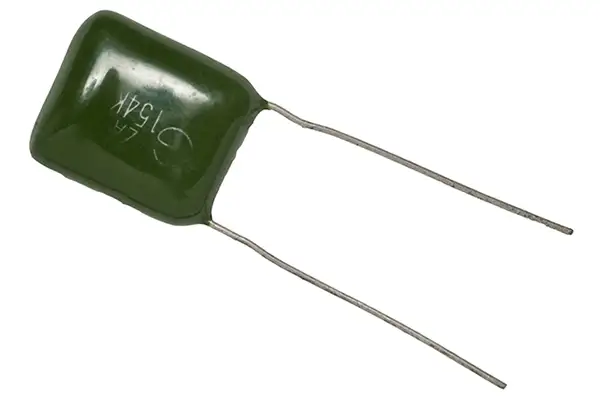
Ceramic capacitors, as the name suggests, are made from ceramic dielectric materials. These small, non-polarized components support high-frequency applications, filtering, and decoupling due to their stability, affordability, and compact size.
Electrolytic Capacitors
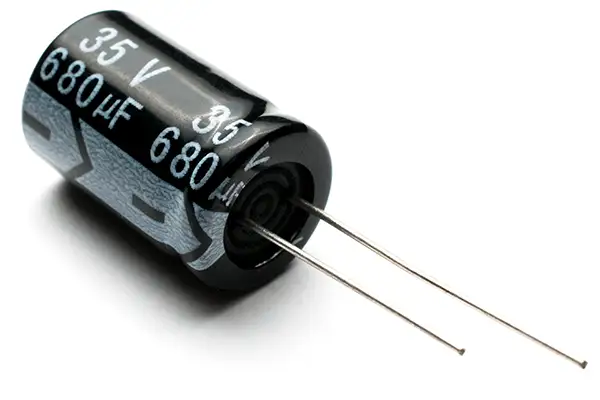
These capacitors offer high capacitance values within a compact package, making them ideal for applications such as power supply filtering and energy storage. Electrolytic capacitors are polarized, so they must be installed in the correct direction in a circuit.
Tantalum Capacitors
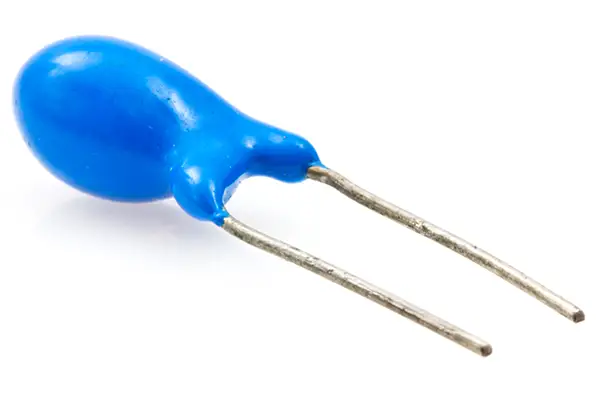
Tantalum capacitors excel in space-constrained or high-performance applications, such as smartphones and medical devices, due to their compactness, stability, and reliability. They are also polarized and known for their precise performance and long lifespan.
Film Capacitors
These capacitors have a plastic film as the dielectric, hence the name. Film capacitors offer excellent reliability, low distortion, and high voltage handling, making them well-suited for audio systems, motor drives, and precision timing circuits.

Supercapacitors
Also known as ultracapacitors, supercapacitors store significantly more energy than traditional capacitors and charge and discharge very quickly. Supercapacitors are best suited for applications that require fast, repeated charging cycles, such as energy harvesting and backup power systems.

Understanding Capacitor Values and Ratings
Capacitor selection relies on understanding their values and ratings to support both performance and reliability in any application. Let’s begin with capacitance, i.e., the amount of electrical charge a capacitor can store, which is measured in farads (F). However, most everyday capacitors are rated in microfarads (µF), nanofarads (nF), or picofarads (pF) due to the small amounts of charge involved. For example, 1 µF = 1,000 nF = 1,000,000 pF.
The voltage rating is also important, as it indicates the maximum voltage the capacitor can safely handle. In any application, exceeding this limit can cause the capacitor to fail or even short-circuit. Therefore, it's important to select a capacitor with a voltage rating that exceeds the maximum voltage anticipated in the circuit.
Capacitor manufacturers also specify a tolerance, which is the allowed variation in actual capacitance from the labeled value. Standard tolerances typically range from ±1% to ±20%, depending on the type of capacitor, the material used, and the intended application. Capacitor values follow a standardized series called the E-series (such as E6, E12, and E24), which defines preferred numerical values spaced by a tolerance. These standardized sets help ensure consistency in manufacturing and simplify circuit design.
How to Choose the Right Capacitor

Based on your application’s needs, several factors influence the selection of the appropriate capacitor. The following checklist can help guide the selection.
- Capacitance Value: Whether you are filtering, timing, or storing energy, choose the capacitance (in µF, nF, or pF) based on your circuit's needs.
- Voltage Rating: To ensure safety and reliability, the capacitor should have a voltage rating that exceeds the maximum voltage expected in your circuit.
- Capacitor Types: Match the capacitor to the application based on these guidelines -
- Ceramic – general-purpose and high-frequency use
- Electrolytic – higher capacitance and power supply filtering
- Tantalum – stable and compact for space-sensitive designs
- Film – reliable and low-loss suits audio and precision circuits
- Supercapacitor – energy storage and rapid charge/discharge cycles
- Polarity: Check if the capacitor is polarized and ensure the installation direction is correct. Non-polarized types can be placed either way.
- Size and Mounting: Ensure the capacitor fits your board or enclosure and matches your assembly method (e.g., surface-mount or through-hole).
- Tolerance: Consider the acceptable variation in capacitance for your application. For example, ±20% may be fine for power filtering, but ±5% or better may be necessary for timing circuits.
- Safety Note: It should be noted that discharging a capacitor can be dangerous, and it is crucial to handle them with care. Capacitors store electrical energy, which can be released rapidly and cause various hazards if not discharged properly.
Capacitors are highly versatile and essential components across countless electronic applications, thanks to their ability to quickly store and release energy. However, understanding the different types of capacitors, including standard capacitor values and ratings, is crucial for selecting the correct version to meet an application’s specific needs.
Peerless Electronics is an authorized distributor of capacitors from leading manufacturers, ensuring reliability and performance. Plus, every purchase is backed by over 50 Value-Added Services, turning each order into a streamlined, customized experience that saves time and money.
Capacitor FAQ
How is an electric capacitor different from a battery?
A capacitor stores energy electrostatically and releases it quickly, while a battery stores energy chemically and releases it slowly over time.
What are standard capacitor values?
Standard capacitor values follow the E-series (like E6, E12, E24) and typically range from picofarads (pF) to microfarads (µF), such as 0.1 µF, 1 µF, 10 µF, 100 µF, and so on.
How do you read capacitor ratings?
Capacitor ratings typically include capacitance (ex: 100 µF), voltage rating (ex: 25 V), and tolerance (ex: ±10%). Smaller capacitors may use a three-digit code to indicate value in picofarads.
What is the unit of capacitance?
The unit of capacitance is the farad (F), though most capacitors are measured in microfarads (µF), nanofarads (nF), or picofarads (pF).
Can a capacitor store electricity permanently?
No. Capacitors can only hold a charge temporarily and will gradually lose their stored energy over time, even without an applied load.
What happens when a capacitor fails?
A failed capacitor may short circuit, lose capacitance, or leak, leading to circuit instability, noise, or complete device failure.