



Recognizable by their simple lever function, toggle switches are found in numerous applications, ranging from household appliances to industrial machinery. Toggle switches help regulate the flow of current in circuits, providing a simple yet reliable way to turn devices and systems on or off.
In this comprehensive guide, we explore various types, how different types of switches toggle, common applications, selection criteria, and more.
What Is a Toggle Switch?
A toggle switch is an electromechanical device that can control the flow of a circuit by moving a lever back and forth. As the name indicates, these switches feature a toggle or manually operated hinge, handle, or lever mechanism (like a tiny joystick). Toggle switches are similar to rocker and push-button switches in function, but their actuator design differs. For example, rocker switches feature a seesaw-type actuator switch/control mechanism, while toggle switches feature a lever-style actuator.
Although there are various toggle switch types, their basic construction remains consistent, featuring an actuator, contacts, terminals, and housing.
Actuator
This is the lever or handle used to close and open circuits, i.e., turn applications on and off, in a toggle type switch. Actuators are typically made of metal or plastic.
Contacts
These are the internal components of the switch controlled by the actuator, and they make or break the connection between the circuit. Toggle switch contacts are made of conductive metals and designed to withstand repeated use without wearing out.
Terminals
The terminals are where the wires connect to the switch, providing a secure connection between the switch and the circuit. Normally located at the bottom of the switch, they are usually screw terminals or spade terminals.
Housing
The outer casing or housing of the switch protects the internal components from damage. These protective casings can be water-resistant or dustproof for extra protection.
Many also feature a toggle switch guard, which covers or protects the lever to prevent accidental switching.
How Does a Toggle Type Switch Work?
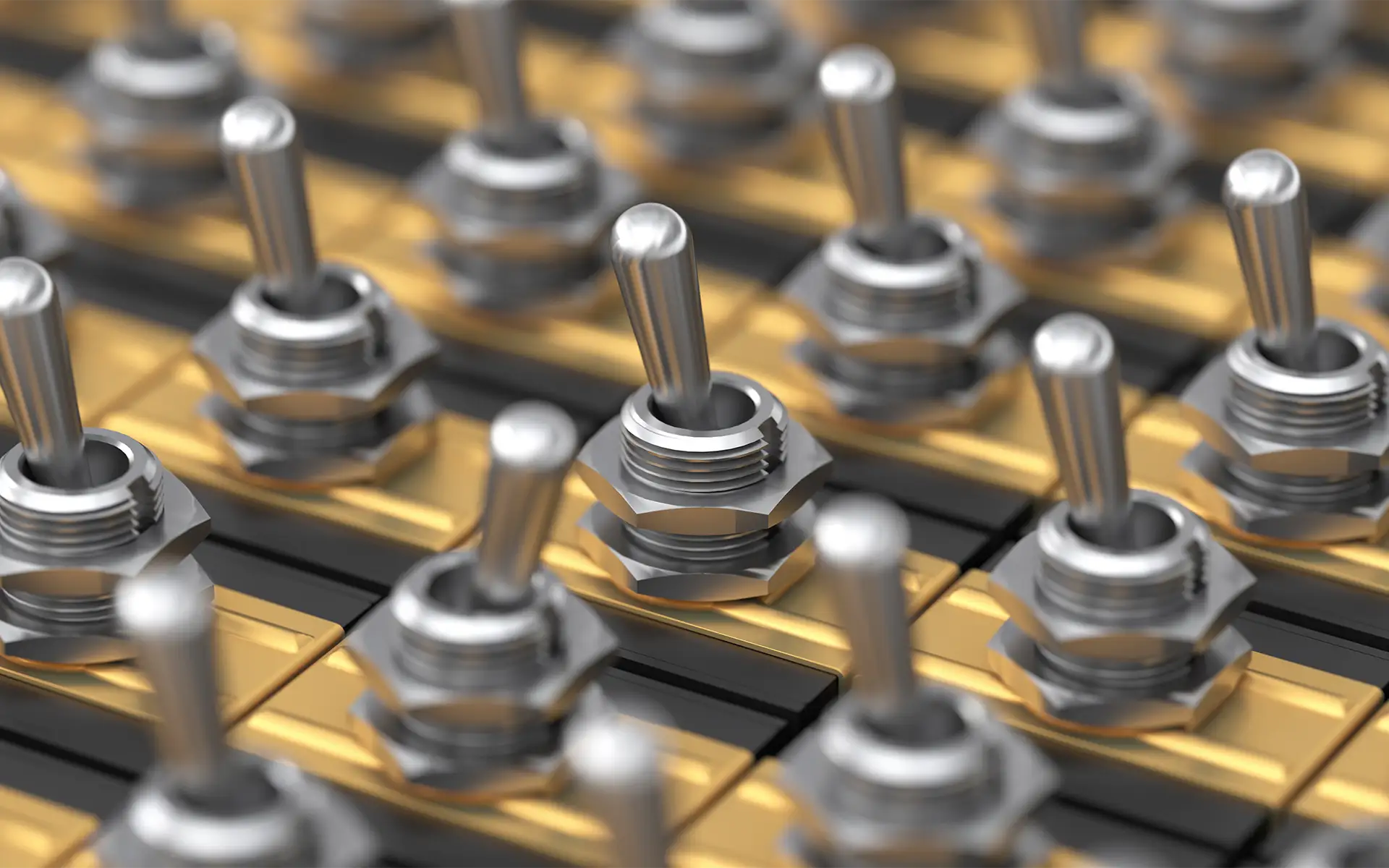
The toggle switch lever can be “toggled” or flipped back and forth, which moves the internal contacts to complete or break an electrical circuit. When the lever moves, it activates a spring-loaded mechanism that snaps the contacts into position, thereby establishing an ON or OFF state. The ON position closes the contacts, allowing current to flow. Conversely, the OFF position opens the contacts and interrupts the flow of electricity.
Most toggle switch types remain in a position until manually moved to another, offering a maintained action. For example, a standard light switch will remain in one position until manually flipped to the other. However, some types of toggle switches provide momentary action, where they remain in one position only as long as the actuator is held or pressed. Once released, a spring mechanism returns it to its default state. A doorbell is an example of momentary action, where the circuit is only active while the doorbell actuator is depressed.
Main Types of Toggle Switches
Toggle switches are classified by circuit function and mechanical behavior. The circuit function describes how many poles and throws a switch has, which determines how it routes electrical current. The mechanical behavior refers to whether the switch action is maintained or momentary. Here are the most common types:
SPST (Single Pole Single Throw)
The SPST is the most basic on/off switch, commonly used in everyday applications, such as lamps and fans. This type directs a single incoming current to one device in an open or closed circuit.
SPDT (Single Pole Double Throw)
The SPDT switch operates by routing a single input to one of two outputs, activating or deactivating them. It can switch between two circuits, but it only connects one at a time. These types of switches are common in automotive applications, such as switching headlights from low beams to high beams.
DPDT (Double Pole Double Throw)
The DPDT controls two circuits simultaneously, like two on/off switches operating in conjunction with one another. For example, with industrial machinery, this toggle switch type can route power from either a primary source or a backup source, ensuring uninterrupted operation.
Momentary Toggle Switches
As explained earlier, the momentary type switch provides a temporary action when “switched”, immediately returning to its default position once the switch action stops. Aside from doorbells, another device that uses this type of switch is a two-way radio with a push-to-talk function.
Maintained Toggle Switches
These types of switches toggle to another position when manually moved, meaning they stay in one position unless flipped to the other. Maintained toggle switches apply when devices or systems need to remain continuously powered or controlled, such as light switches, power switches on equipment, and industrial control panels.
Applications of Toggle Switches
Toggle switches can be found across a wide range of applications and industries, providing simple and reliable circuit control for devices and systems.
- Military - Common military applications include control panels for lighting and power distribution systems inside armored vehicles and tanks.
- Aerospace - Thanks to precise switching and control, different types of toggle switches are used with aircraft dashboards and control panels.
- Industrial - The toggle switches’ momentary and maintained action options keep equipment and systems operating reliably, from stopping and starting equipment to switching between power sources.
- Consumer electronics - The toggle switch’s simple on/off function makes it essential for everyday use, like lamps, power strips, and small appliances.
Toggle Switch vs. Other Switch Types
Toggle switches are just one of many types of switches available for circuit control. However, each switch’s design and operation make it better suited for particular applications. Factors such as size, actuator style, durability, and even aesthetics help determine whether a toggle, rocker, push-button, or slide switch is the right fit.
- Toggle Switches - The toggle switches simple lever design provides durable on/off control in industrial, automotive, and household applications.
- Rocker Switches - The rocker switch’s seesaw-style actuator makes it ideal for appliances and power strips, offering a flatter and more modern look.
- Push Button Switches - These push-to-perform switches offer temporary action when actuated, making them ideal for doorbells, calculators, and reset controls where momentary action is needed.
- Slide Switches - These switches feature a small slider that moves side to side to open or close a circuit. We often see slide switches in devices such as test instruments or flashlights.
How to Choose the Right Toggle Switch
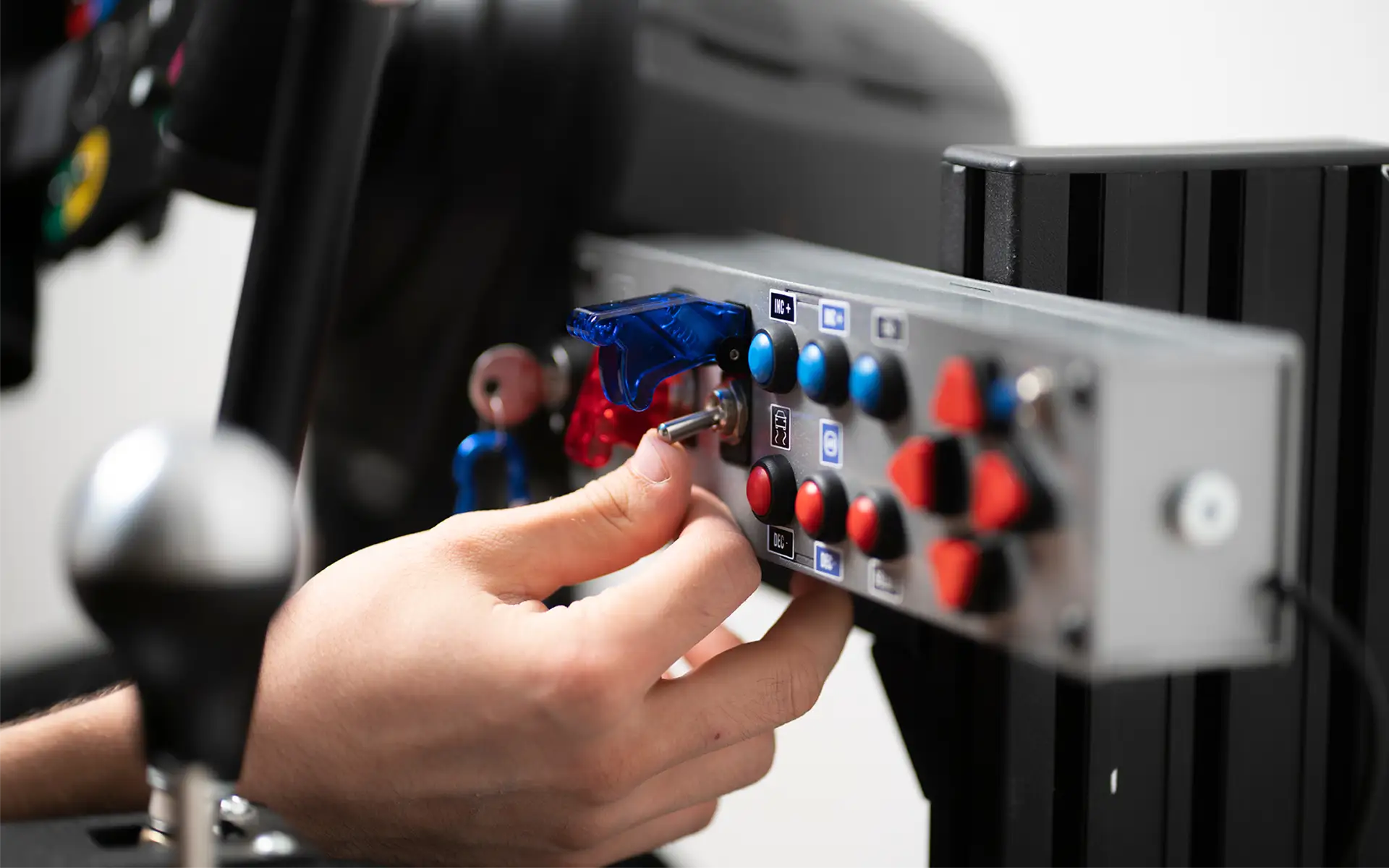
Several factors help determine which toggle switch is best suited for an application.
Current/Voltage Rating
The toggle switch must be able to safely handle the application’s maximum current and voltage to avoid failure or overheating.
Number of Poles & Throws
Determine the optimal toggle switch configuration based on the number of circuits that need controlling and whether switching between outputs is required.
Size & Mounting Style
Consider the physical space available and the design of the panel or enclosure. There are miniature, standard, and heavy-duty switch sizes, with mounting styles including panel-mount and PCB-mount.
Environment
For applications in harsh or outdoor environments, using waterproof, dustproof, or sealed toggle switches that meet the relevant IP ratings is ideal.
Shop Toggle Switch Types at Peerless Electronics
Understanding the various types of toggle switches is crucial for selecting the ideal solution that meets an application’s specific needs. These simple switches play a vital role in helping control everyday and complex systems.
At Peerless Electronics, we offer an extensive selection of toggle switch types from today’s leading manufacturers. Whether you’re sourcing components for industrial machinery or meeting the rigorous standards of Military, Aerospace, and Defense applications, we are your trusted partner. Not only are we an authorized distributor for the components we sell, but we are also CMMC (C3PAO) compliant, ensuring defense-grade protection.
FAQs About Types of Toggle Switches
What are the main types of toggle switches?
The most common types include SPST, SPDT, and DPDT. Mechanical action also influences classification, for example, whether it is maintained or momentary. Maintained types of switches toggle to change the circuit status, while a momentary type switch only remains active as long as they are being pressed or held.
What is the difference between SPST and SPDT toggle switches?
The SPST switch is the simplest on/off switch for controlling a single circuit. An SPDT switch controls one input and directs it to one of two outputs, allowing applications to switch between two circuits.
What is a DPDT toggle switch used for?
A DPDT switch can control two circuits independently of each other. DPDTs are common in industrial machinery and motor control applications.
How do I choose the right type of toggle switch?
Critical factors to consider are: the application’s current and voltage rating, the required pole/throw configuration, the application’s operating environment, and whether maintained or momentary action is necessary.