


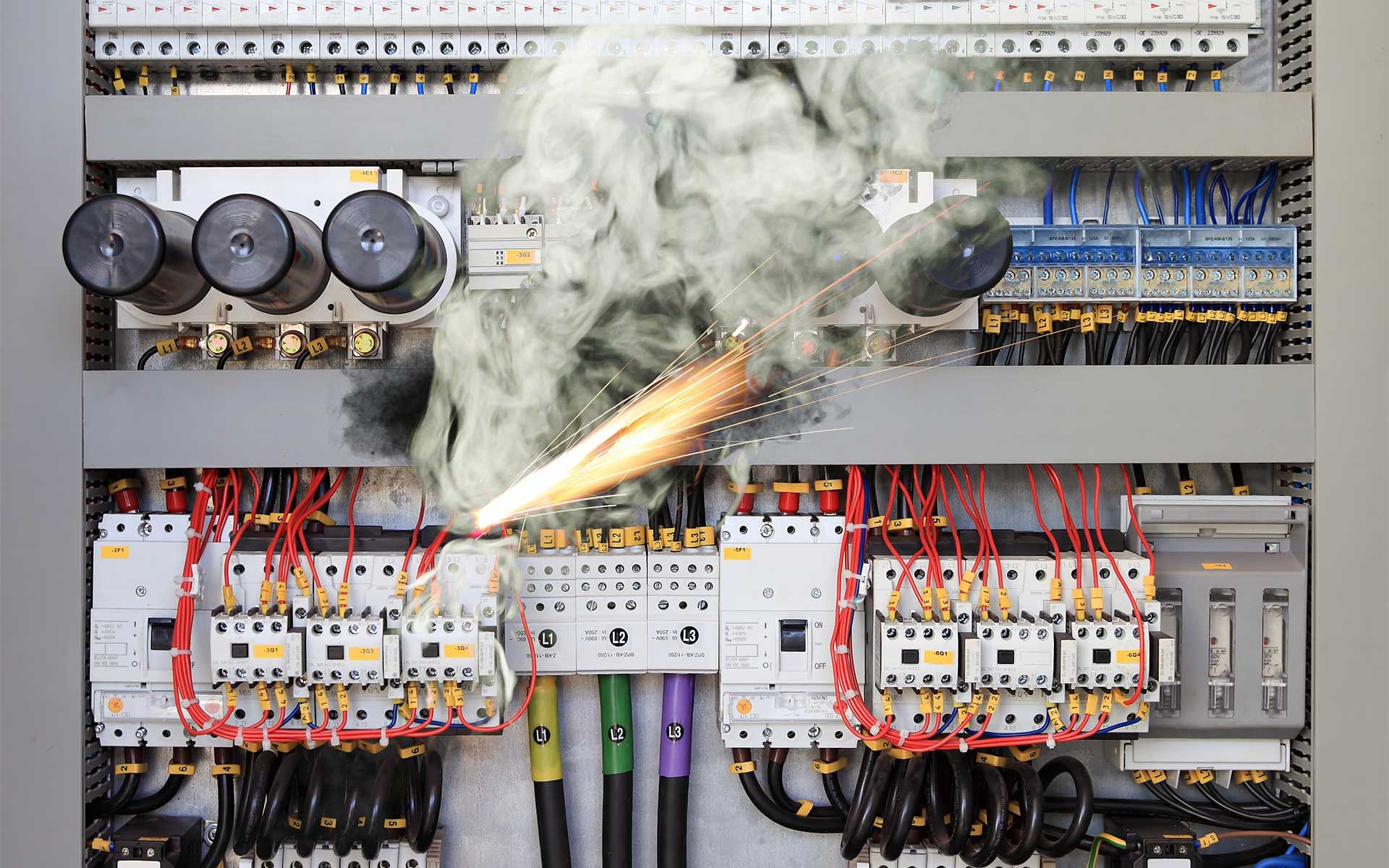

Electricity can be dangerous to work with, and one of the most common hazards is a short circuit. A short circuit happens when electricity suddenly takes an unintended, low-resistance path, causing current to surge where it shouldn’t. This surge creates heat and sparks, and it can damage equipment in seconds.
Short circuits can occur anywhere electricity flows, from home wiring to complex industrial systems. That’s why understanding them is critical when you work with electrical equipment, whether you’re troubleshooting problems or keeping systems safe. In this blog, we’ll cover what you need to know to spot potential short-circuiting early and prevent costly failures.
Short Circuit Meaning Explained
Here’s a slightly more technical short circuit definition that explains its working principle and why it poses a hazard. When a conductive path bypasses the circuit’s intended load and allows electricity to flow along a much lower-resistance route. As a result of this sharp drop in resistance, the current increases dramatically according to Ohm’s Law (I = V/R). This sudden spike in current generates intense heat in the conductor, which can melt insulation, create arcing or sparks, and even ignite surrounding materials.
Short circuits commonly occur because wires and components are sized to handle a specific amount of current. When the current exceeds that rating, the conductor overheats almost instantly. In fact, the term short circuit derives from the faulty path being electrically “shorter” than the intended path, allowing electricity to take the quickest route back to the source.
How a Short Circuit Works in an Electrical Circuit
In typical circuits, electricity flows along a controlled path through wires, components such as resistors and connectors, and devices such as lights and motors. These provide resistance, which regulates current and energy distribution. In larger or more complex systems, a power distribution block may be used to safely route electricity from a single source to multiple circuits. Under these conditions, the system operates predictably and within safe temperature limits.
However, when a low-resistance path bypasses the intended load, like a shortcut, a short circuit occurs. Without the resistance, the current rushing through this unintended route exceeds the rating of the wires and components. This surge generates heat, produces sparks or arcing, and can quickly damage equipment. Even within a power distribution block, a short circuit can quickly reach connected circuits, endangering the system.
What Causes a Short Circuit?
Short circuits typically occur when components are damaged or compromised. The most common causes include damaged wiring insulation, loose connections, moisture, and overloaded circuits. Understanding and recognizing these causes can help you identify risks early and troubleshoot before safely correcting the issue. In any case, it’s critical to turn the power off before inspecting circuits.
Common Causes in Home Electrical Systems
Common household short circuit culprits include old or damaged electrical wiring, worn-out outlets, or appliances that overheat. Another frequent issue is a short to ground, which is when a live wire accidentally touches a grounded surface, such as a metal box or water pipe. The connection creates a low-resistance path for electricity to surge, trip breakers, or even start a fire.
Causes in Cars and Automotive Systems
Short-to-ground situations are also common in vehicles because wires are constantly exposed to vibration, friction, and environmental wear. These conditions can cause corrosion, worn or chafed insulation, or contact with exposed metal, creating a low-resistance path to the car chassis. This electrical shortcut can blow fuses, damage electronics, or cause sparks.
Causes in Electronics and PCBs
In electronics and printed circuit boards (PCBs), short circuits can result from solder bridges or unintentional connections, moisture, or dust accumulating between connections. Even small amounts of conductive debris can allow electricity to bypass its intended path.
Dangers and Effects of a Short Circuit
The sudden surge of current caused by short circuits can trip breakers, blow fuses, overheat wires, and damage equipment. If not properly protected, it can also create sparks or fires, posing serious safety hazards. Therefore, understanding the dangers and effects is the first step toward preventing the worst.
Why Short Circuits Can Lead to Fires
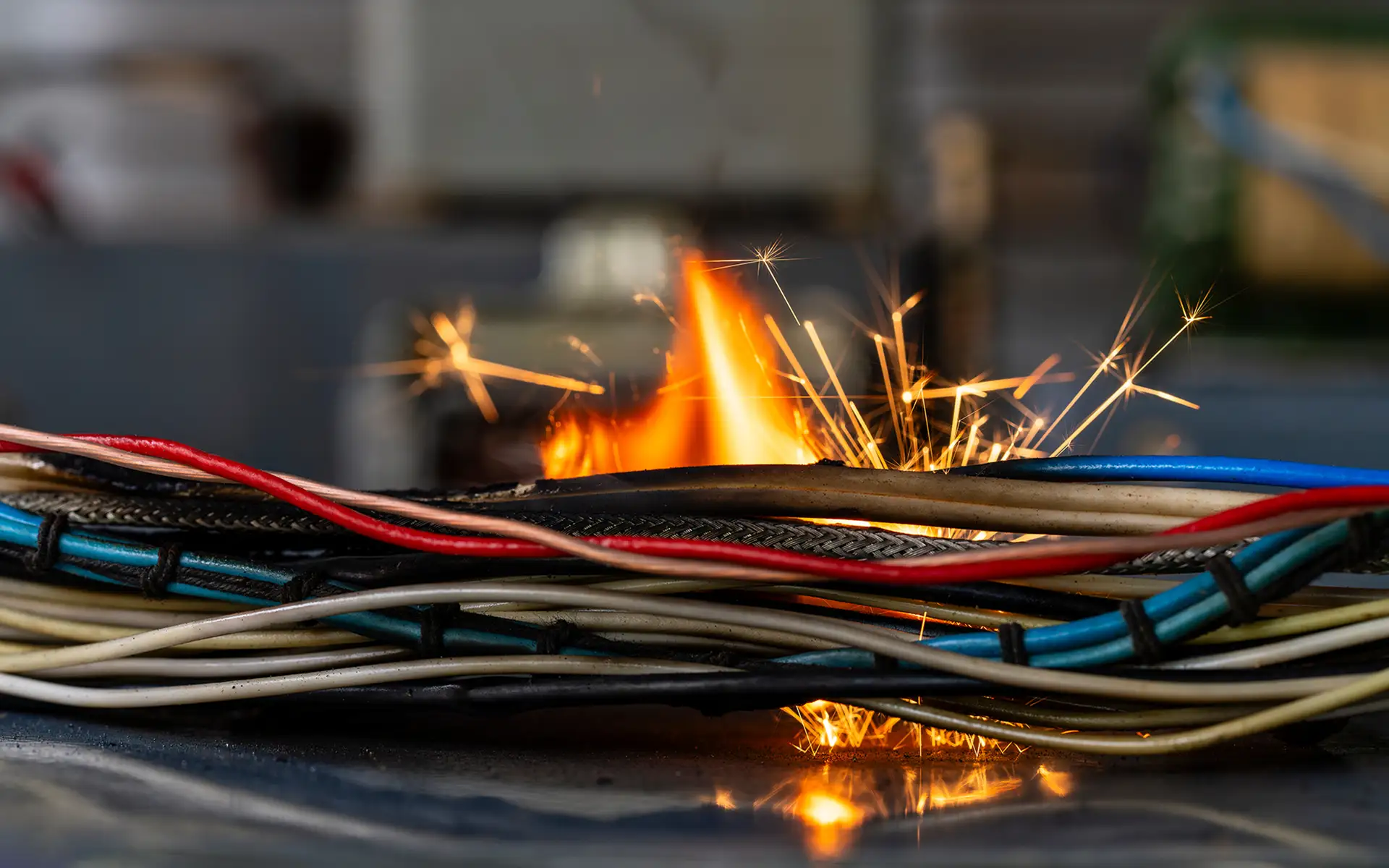
Unfortunately, a short circuit can lead to fires in worst-case scenarios. Here’s why: when the normal resistance that regulates currents is removed, the unrestricted flow of energy generates intense heat. This can cause arcing, which occurs when electricity jumps through the air between conductors that aren’t supposed to touch. That jump releases energy as heat, light, and sparks, which can burn insulation and ignite nearby materials. Even a small gap can produce enough energy to start a fire.
How Circuit Breakers Respond to Shorts
You’re probably familiar with the phrase “trip the breaker.” A breaker, short for circuit breaker, is a safety device that protects electrical circuits from excess current caused by short circuits or overloads. This device monitors the flow of electricity and automatically opens the circuit when the current exceeds a safe level. As a result, the flow of electricity is stopped before it can cause a power outage or further damage. This intentional interruption protects systems.
Circuit breakers use either thermal, magnetic (electromagnetic), or a combined thermal-magnetic trip mechanism. In a thermal mechanism, a bimetallic strip bends as it heats up from prolonged overcurrent. In a magnetic mechanism, a sudden surge of current produces a strong magnetic field that instantly trips the breaker. After fixing the underlying issue, manually resetting the breaker will close and restore power to the circuit. Never ignore a tripped breaker, as it signals a potential short circuit, overload, or fault that needs attention.
Short Circuit vs Open Circuit
What is the difference between a short vs open circuit? A short circuit is an unintended, low-resistance path that causes excessive current. An open circuit, on the other hand, is a break in the conductive path that stops all current flow. Capacitor types offer a helpful way to visualize this difference. During charging, a capacitor briefly acts like a short circuit, allowing a momentary surge of current. Once fully charged, it behaves more like an open circuit, blocking a steady current.
Real-World Examples of Short vs Open Circuit
Let’s examine a couple of examples of both circuit occurrences in a home and commercial setting.
At home, when a ceiling fan stops working because a wire inside the switch has come loose, an open circuit is created, preventing electricity from reaching the fan. If the exposed wire were to touch the metal housing or another wire, it could cause a short circuit, potentially tripping the breaker or sparking.
In a factory, when a conveyor motor stops because a fuse in the motor control panel has blown, it creates an open circuit that halts current flow to protect the equipment. If a damaged wire inside the panel were to touch another live wire or a grounded surface, it could cause a short circuit, leading to a surge of current that might trip protective devices or damage the motor.
Types of Short Circuits
There are various types of short circuits, each classified by the parts of the electrical system involved. It’s helpful to understand the type when choosing the right protective strategies and devices. Here are a few common short circuit types.
Phase-to-Phase
This type occurs when two live wires come into contact, causing a surge of current. Phase-to-phase shorts are common in damaged wiring or faulty appliances.
Phase-to-Ground
When a wire touches a grounded surface, such as metal or the ground wire, a phase-to-ground short can occur, causing sparks.
Three-Phase Short
In a three-phase system, like an industrial motor, a three-phase short occurs when all three live wires come into contact. This type of short is rare, but it can be very serious, leading to major current spikes and equipment damage.
How to Detect a Short Circuit
When a short circuit occurs, there are typically clear indications, such as a burning smell, sparks, tripped breakers, blown fuses, or overheated wires. To safely investigate, unplug the affected equipment and visually inspect the wiring, devices, and connectors while the equipment is powered off. In an industrial setting, always adhere to lockout/tagout procedures and report issues. In any case, never attempt repairs on live circuits unless qualified.
Preventing Short Circuits
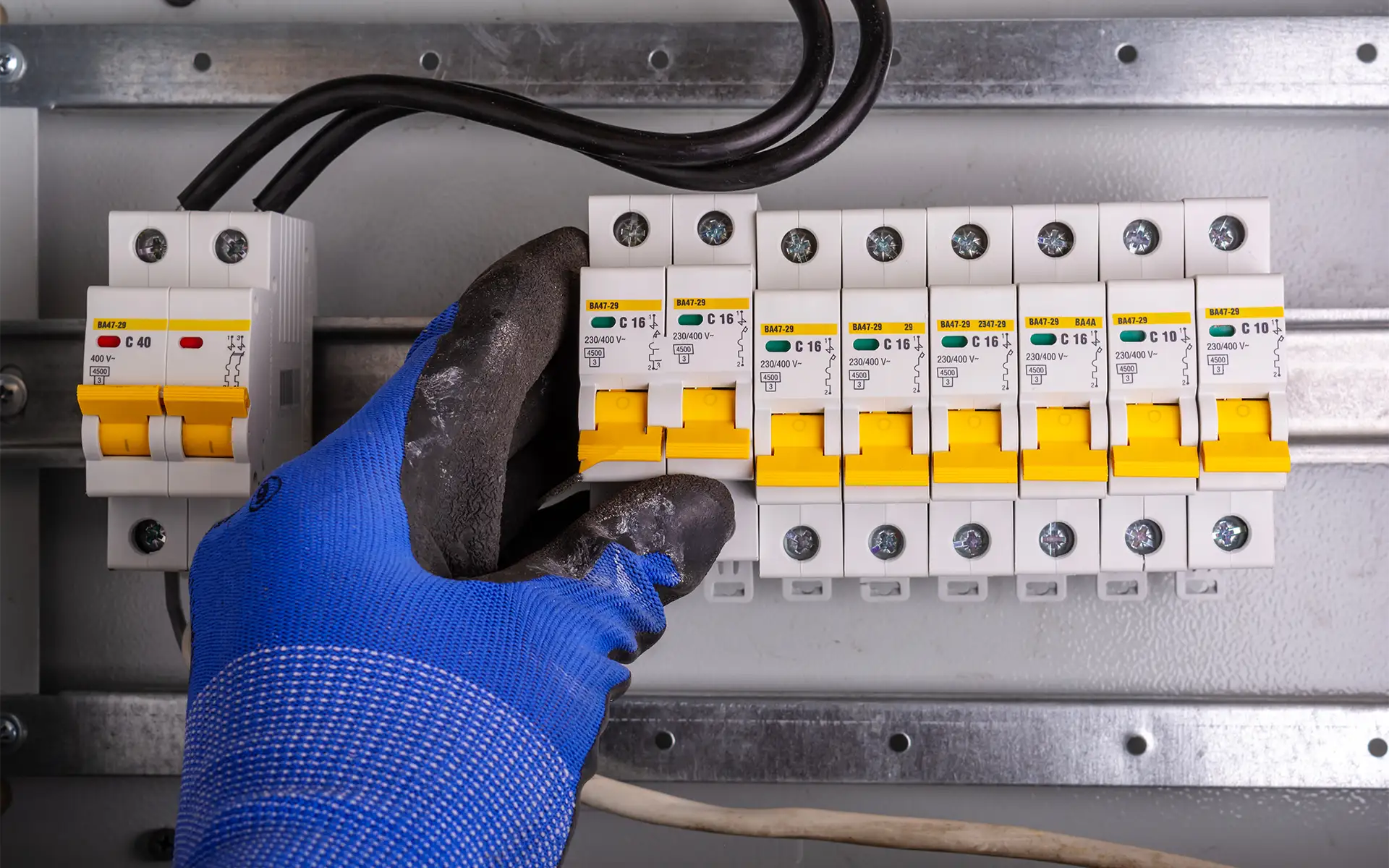
Given the risks of short circuits, it’s important to take proactive safety measures to prevent them. The following measures can help protect equipment in industrial settings from these events and ensure personal and workplace safety.
- Regularly inspect cords and wiring, looking for frayed, cracked, or exposed wires in appliances, tools, and industrial cables.
- Always avoid overloading circuits by avoiding plugging too many devices into a single outlet or power strip. In industrial settings, regularly monitor the panel and equipment load.
- Keep equipment dry and clear of moisture and dust, which can cause unintended paths for electricity.
- Always use proper fuses and breakers to ensure devices and industrial circuits remain protected with ratings that match their loads.
- Always adhere to lockout/tagout procedures and de-energize equipment before maintenance or inspections.
- If equipment or devices are damaged, replace them immediately.
Short circuits can happen anywhere electricity flows. Understanding why they occur and how to prevent them is essential for anyone working with electrical equipment. Whether you’re troubleshooting a device at home or maintaining machinery in an industrial facility, knowing the signs of a short circuit and taking proper safety precautions can help prevent costly damage and keep systems safe.
At Peerless Electronics, we’ve spent decades helping customers source the high-quality parts they need to prevent short circuits and other costly failures. As an authorized distributor for the world’s leading electrical component manufacturers, we stock thousands of solutions guaranteed to meet strict quality and reliability standards to keep your projects running safely and efficiently. Plus, Peerless offers over 50 value-added, customized services supported by custom-tailored technical support.
Frequently Asked Questions
What is a short circuit?
A short circuit is an unintended low-resistance path in a circuit that allows excessive current to flow.
What causes a short circuit?
Short circuits are caused by damaged wires, faulty components, or accidental contact between conductive parts.
What happens during a short circuit?
Current spikes sharply, which can trip breakers, blow fuses, or damage equipment.
How do you know if you have a short circuit?
Signs include tripped breakers, blown fuses, sparks, smoke, or devices not working properly.
Can a short circuit start a fire?
Yes. Excessive current can generate heat, potentially igniting surrounding materials.
What is the difference between a short circuit and an open circuit?
A short circuit allows too much current to flow through an unintended path, while an open circuit stops current flow entirely.
What does “short to ground” mean?
It means a live wire or component is unintentionally touching the ground, creating a direct path for current.
Can electronics short circuit even when turned off?
Yes. Many electronics can short circuit even when turned off if there is a fault in the wiring, damaged components, or residual stored energy (like in capacitors or batteries). Turning electronics off only stops normal operation, but it doesn’t always eliminate all current paths.