








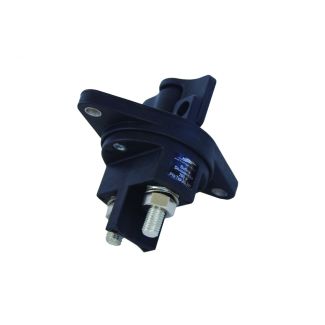


A battery disconnect switch provides critical preventative control over power systems. These devices allow users to completely cut off electrical power, protecting against potential theft, short circuits, or electrical fires when systems are not in use. They are especially useful during maintenance, storage, or long periods of inactivity, helping prevent excessive battery drain and extend the overall lifespan of electrical systems. Battery disconnect switches are versatile, reliable, and suitable for a wide range of industries, including automotive, marine, and heavy equipment applications. Using a battery disconnect switch ensures safety, convenience, and efficiency for any power-dependent system.
What Is a Battery Disconnect Switch?
Battery disconnect switches are also called cut-off switches, kill switches, or battery isolation switches. It’s a manually operated device that isolates a battery or battery bank from an electrical system. This physical interruption of current flow protects against accidental short circuits and reduces the risk of electrical fires. It also prevents unnecessary power drain from systems when not in use, for example, during storage. Battery disconnect switches act as a preventative device, allowing operators to safely perform maintenance, store equipment, or secure vehicles. These switches ensure complete disconnection of power with a simple flip or turn, extending battery life and providing peace of mind in any system.
How Battery Disconnect Switches Work
The function of a battery disconnect switch is to interrupt the electrical circuit between a battery and the system it powers. This, in turn, stops the flow of electrical current. When engaged, the switch allows current to flow freely from the battery through its terminals, supplying power to the system. Alternatively, disengaging or turning the switch off physically separates the contacts inside the switch. This breaks the circuit, stopping all current flow. The battery disconnect switch provides a simple yet effective way to interrupt power, preventing battery drain, protecting against accidental shorts, and reducing the risk of electrical fires.
These devices can be operated remotely or manually. A manual battery disconnect switch requires the operator to physically turn a knob, flip a lever, or rotate a key to open or close the circuit. A remote battery disconnect switch, however, allows disconnection through a wireless signal or an electrical actuator. Remote versions are especially convenient when access to the battery is dangerous or hard to reach. Regardless of type, battery disconnect switches are reliable and essential preventive devices across many industries and applications.
Types of Battery Disconnect Switches
There are various types of disconnect switches, each designed to cut power quickly for safety, maintenance, or theft prevention.
Manual Rotary Disconnect Switches
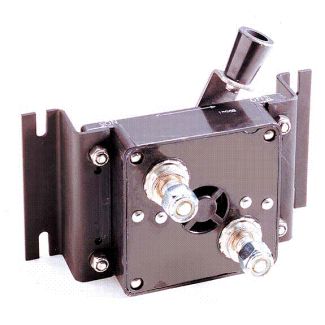
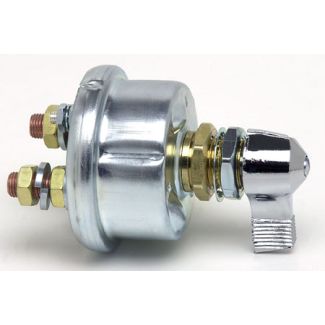
This switch features a simple knob or dial that opens or closes the battery circuit. Manually turning the knob completes the circuit to supply power or interrupts it to stop current flow. These switches are simple, yet reliable. The rotary manual battery disconnect switch is commonly rated for 50 to 300 amps, making it suitable for automotive or small-machinery applications. We commonly find these switches where straightforward manual control is sufficient, such as with cars, trucks, and recreational vehicles. This common automotive battery disconnect switch’s tactile operation ensures clear feedback to the user and minimizes the risk of accidental disconnection.
Keyed Battery Disconnect Switches
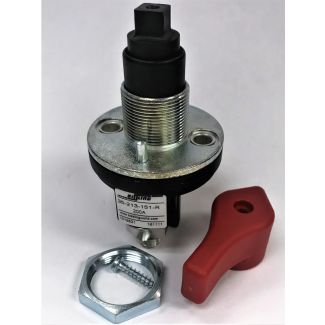
These switches operate like the manual rotary switch. However, they require a key to operate to prevent unauthorized use. Turning the key engages or disengages the circuit, stopping power flow when needed. We commonly find this type of battery disconnect switch in fleet vehicles, construction equipment, and heavy machinery, where security and theft prevention are important. The keyed feature provides an added layer of security, ensuring that only authorized personnel can start the vehicle or operate the system. Therefore, keyed disconnect switches are practical in applications that require both safety and asset protection.
Remote or Solenoid Disconnect Switches
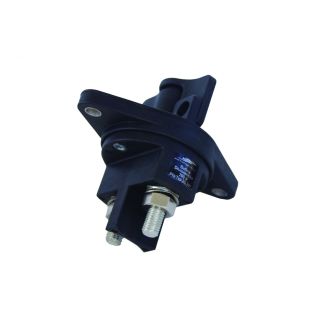
A solenoid-powered or remote controlled battery disconnect switch allows electronic or push-button control of battery circuits. Instead of manually turning a knob or key, operation can occur via a wired or wireless signal. This activation triggers an internal solenoid to open or close the circuit. The remote setup offers enhanced convenience and safety, as users can disconnect power without physically accessing the battery, reducing exposure to live electrical components. A remote control battery disconnect switch is commonly used when rapid shutdown or remote control is critical, such as in emergency vehicles, specialty fleet trucks, RVs, and marine applications. These switches are also particularly useful when emergency power isolation is necessary.
Heavy-Duty Industrial Disconnect Switches
These disconnect switches excel in high-current applications and harsh environments. They feature rugged construction, corrosion-resistant materials, and protective housings to withstand dust, moisture, vibration, and extreme temperatures. Industrial disconnect switches are rated for several hundred to over a thousand amps. This rating is ideal for demanding machinery in agriculture, mining, and industrial applications. With these disconnect switches, operators can safely isolate large battery banks, perform maintenance, or protect equipment during prolonged shutdowns. Their robust design ensures reliable operation over long periods, even in environments where a standard automotive battery disconnect switch would fail.
Benefits of Using a Battery Disconnect Switch
For battery-powered systems, disconnect switches offer many practical and safety-related advantages. A primary benefit is preventing battery drain when systems are inactive. Battery disconnect switches prevent parasitic current draw from electronics by completely isolating the battery from current flow. This helps the battery retain its charge and extends its overall lifespan.
They also provide enhanced safety during maintenance. Technicians and operators can work on electrical systems without the risk of live circuits, reducing the chance of accidental shocks or short circuits. Complete current isolation also reduces the risk of electrical fires, as any unintended sparks or shorts are prevented when the circuit is open.
Disconnect switches also help deter theft. With a keyed or remote control battery disconnect switch, unauthorized access to vehicles or equipment is more difficult. Therefore, both the battery and system remain protected.
Overall, installing a battery disconnect switch is a preventative measure that provides convenience, protection, and longevity. By safeguarding batteries, reducing maintenance hazards, and deterring theft, these switches provide peace of mind for automotive, marine, and industrial applications. Although relatively simple in design, these devices have a significant impact on system safety and reliability.
How to Choose the Right Battery Disconnect Switch
There are several factors to consider when choosing the right disconnect switch, including location, voltage, amperage, mounting style, environmental protection, and pole configuration. Carefully evaluating these technical factors will help ensure safe and reliable operation. First, consider whether the application requires a remote control battery disconnect switch rather than a manual option.
For voltage requirements, the switch must be rated to handle the voltage of your system to prevent overheating or arcing. For automotive, marine, and industrial applications, this is commonly 12, 24, or 48 volts. Next, consider continuous and intermittent amperage ratings. Continuous indicates the maximum current the switch can handle during normal operation. Whereas the intermittent amperage represents short bursts of higher current, such as when starting an engine. Choose a switch rated at or above your system’s expected load to prevent premature wear or failure.
The mounting style is another key factor. Some switches are panel-mounted for easy access, while others are designed for under-hood, in-cabinet, or battery-box installation. The selected mounting style should suit your vehicle or equipment layout while allowing safe access and operation.
You should also ensure the battery disconnect switch is rated for the environment it will be used in. Look for switches with IP or NEMA ratings that match your conditions, such as exposure to water, dust, vibration, or extreme temperatures. IP and NEMA-rated housings and sealed contacts improve longevity and reliability in demanding applications.
Finally, evaluate pole configuration. For example, single-pole switches isolate one battery, while dual-pole switches can control two separate circuits or completely disconnect both positive and negative terminals. Multi-pole configurations are useful for dual-battery systems, RVs, or complex industrial setups.
Common Applications
Battery disconnect switches are used across industries where electrical systems require control, safety, and reliability. In automotive applications, disconnect switches allow owners and mechanics to safely isolate high-current systems during maintenance or storage. Disconnect switches help prevent battery drain during periods of inactivity and reduce the risk of accidental electrical shorts. They also provide a quick way to cut power in emergency situations.
With marine and RV systems, disconnect switches protect batteries from parasitic drain caused by onboard electronics and appliances. They also enhance safety by completely isolating electrical systems while docked, during maintenance, or in storage. This both reduces the risk of fires and prolongs battery life.
A battery disconnect switch provides controlled power isolation for high-current systems, like industrial machinery. It allows technicians to safely service equipment without risk of shocks or short circuits. Heavy-duty battery disconnect switches provide system reliability in factories, processing plants, and other rugged environments.
Finally, remote-controlled or keyed disconnect switches allow fleet operators to safeguard vehicles and equipment. Battery disconnect switches prevent unauthorized use and theft, reduce battery drain during idle periods, and simplify maintenance procedures.
Technical Specifications to Consider
Current rating: the continuous amperage rating must meet or exceed the system’s normal operating load. Ensure its intermittent or inrush rating can safely handle short bursts of high current.
Voltage capacity: ensure rating for the system voltage, typically 12V or 24V in automotive and marine applications, and higher in industrial environments.
Terminal type: select terminals that match your cable size and configuration. Common options include stud terminals and blade terminals.
Inrush current handling: systems with motors, compressors, or high-draw components require switches that can withstand temporary current spikes.
Housing material/weather resistance: consider appropriate environmental protection ratings for exposure to moisture, dust, vibration, or temperature extremes.
Frequently Asked Questions
Can a battery disconnect switch improve safety during maintenance?
Yes. A battery disconnect switch opens the electrical circuit, which stops current flow before maintenance begins. This reduces the risk of accidental short circuits, sparks, or electrical shock while working on wiring, starters, alternators, or other powered components. It also protects sensitive electronics from unintended voltage surges during service.
Should the switch be installed on the positive or negative terminal?
In most automotive and light-duty applications, the switch is typically installed on the negative terminal. Disconnecting the negative side reduces the risk of accidental short circuits if a tool comes into contact with the vehicle chassis. Some industrial or specialty systems allow switch installation on the positive side or are configured as dual-pole units to isolate both terminals. Always follow manufacturer installation recommendations and applicable electrical standards.
Will disconnecting the battery affect my vehicle’s electronics or settings?
It can. Disconnecting the battery may reset clock settings, radio presets, seat memory, and onboard control modules. Some vehicles may require a relearn procedure for throttle position or other adaptive systems after reconnection. Consult your vehicle manual for model-specific guidance.
Can I install this battery disconnect switch myself?
Yes, installation is pretty straightforward, especially for individuals with basic familiarity with electrical systems. However, proper cable sizing, secure terminal connections, and correct amperage selection are critical. Always follow the manufacturer's installation instructions.
Does this switch require any maintenance?
Most battery disconnect switches are low-maintenance. Periodic inspection is recommended to ensure terminals remain tight, corrosion is minimal, and the housing is intact. In harsh environments, cleaning contacts and checking for moisture intrusion can help maintain reliability.
Is it safe to use a battery disconnect switch?
Yes, when properly rated and correctly installed, they are safe and reliable.
Are battery kill switches effective?
Yes, battery disconnect switches help prevent battery drain, reduce fire risk, and deter unauthorized use. While they do not replace fuses or circuit breakers for fault protection, they serve as reliable preventative devices for power isolation and system control.